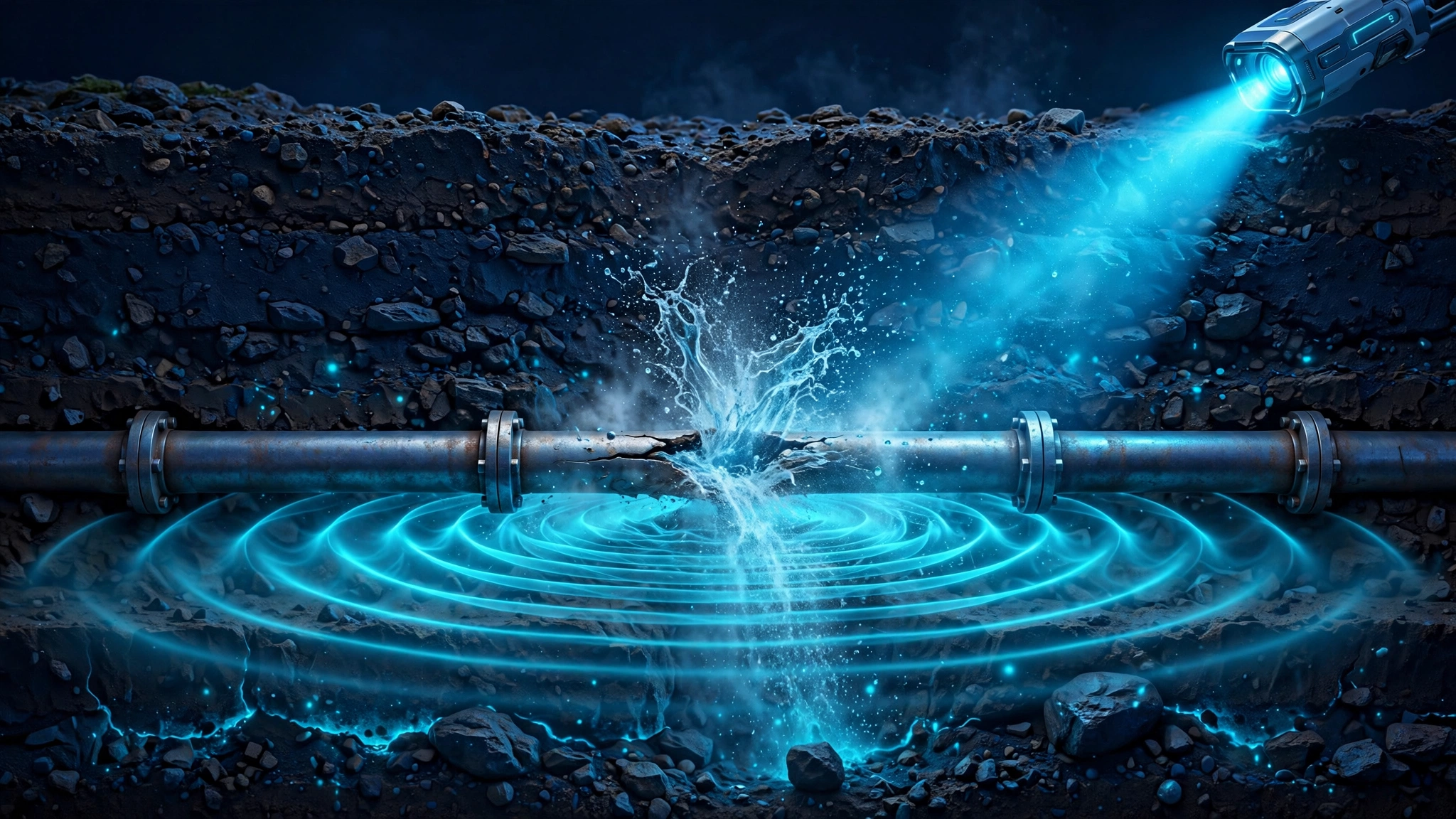
Some leaks defeat every other method: too deep for clear acoustic readings, in plastic pipe that doesn't carry sound, or under conditions where thermal shows nothing. That's when we use tracer gas — the same principle utilities use to find gas leaks, adapted for water pipes. The line is drained and filled with a safe, non-flammable blend of nitrogen and hydrogen; the tiny hydrogen molecules escape through the leak, rise through soil or concrete, and a sensitive detector sniffs them out at the surface — directly above the break.
Warning signs
When to call us
Tracer gas is typically a second-line method — we reach for it when acoustic and thermal have been tried or when conditions obviously favor it (deep plastic lines, for example). If a previous investigation failed to pinpoint your leak, tracer gas is often the method that finishes the job.
How we find it
The industry-standard blend: non-flammable (below the 5.7% hydrogen combustion threshold), non-toxic, and the hydrogen molecule is the smallest in existence — it escapes through leaks nothing else would reveal and dissipates harmlessly.
The suspect section is isolated, drained, and filled with the gas blend at low pressure — a careful, controlled procedure.
A hydrogen-sensitive detector sweeps the surface above the pipe path. The strongest reading marks the leak — simple in principle, precise in practice.
As with acoustic work, the pipe's route is traced before gas goes in, so surface readings map to the real line.
Our process
- 1Method selection
We confirm tracer gas is the right tool — usually after acoustic/thermal, or immediately when conditions dictate. - 2Isolate & prepare
The leaking section is isolated from the rest of the system and drained. - 3Charge with forming gas
The section is filled with the nitrogen-hydrogen blend at controlled low pressure. - 4Surface sweep
The detector follows the mapped pipe path; readings peak above the leak. - 5Mark & verify
The point is marked, and where possible cross-checked with a second reading before we call it located.
Expect a more involved setup than acoustic work — isolation, draining, and charging take time — but a decisive result. The surface reading is unambiguous: the detector either smells hydrogen there or it doesn't. You'll see the peak reading yourself.
Honest limitations
Tracer gas needs an isolatable, drainable section — some system configurations make preparation impractical, and we'll tell you upfront if that's the case. Very porous ground can diffuse the gas broadly, widening the indicated area; in those conditions we narrow as far as honestly possible and say so. It's also a locating method, not a repair — excavation or access still follows.
Sandy & Utah context
Tracer gas is established in the Salt Lake Valley — local leak specialists describe the method on their Sandy-area pages (drain the pipe, fill with a safe inert nitrogen-hydrogen mix, detect where it surfaces), so it's a recognized, expected capability here, not an exotic import. It's particularly valuable in Sandy for the cases our housing stock produces: aging plastic service lines that defeat acoustic, and under-slab cold-water leaks that defeat thermal.