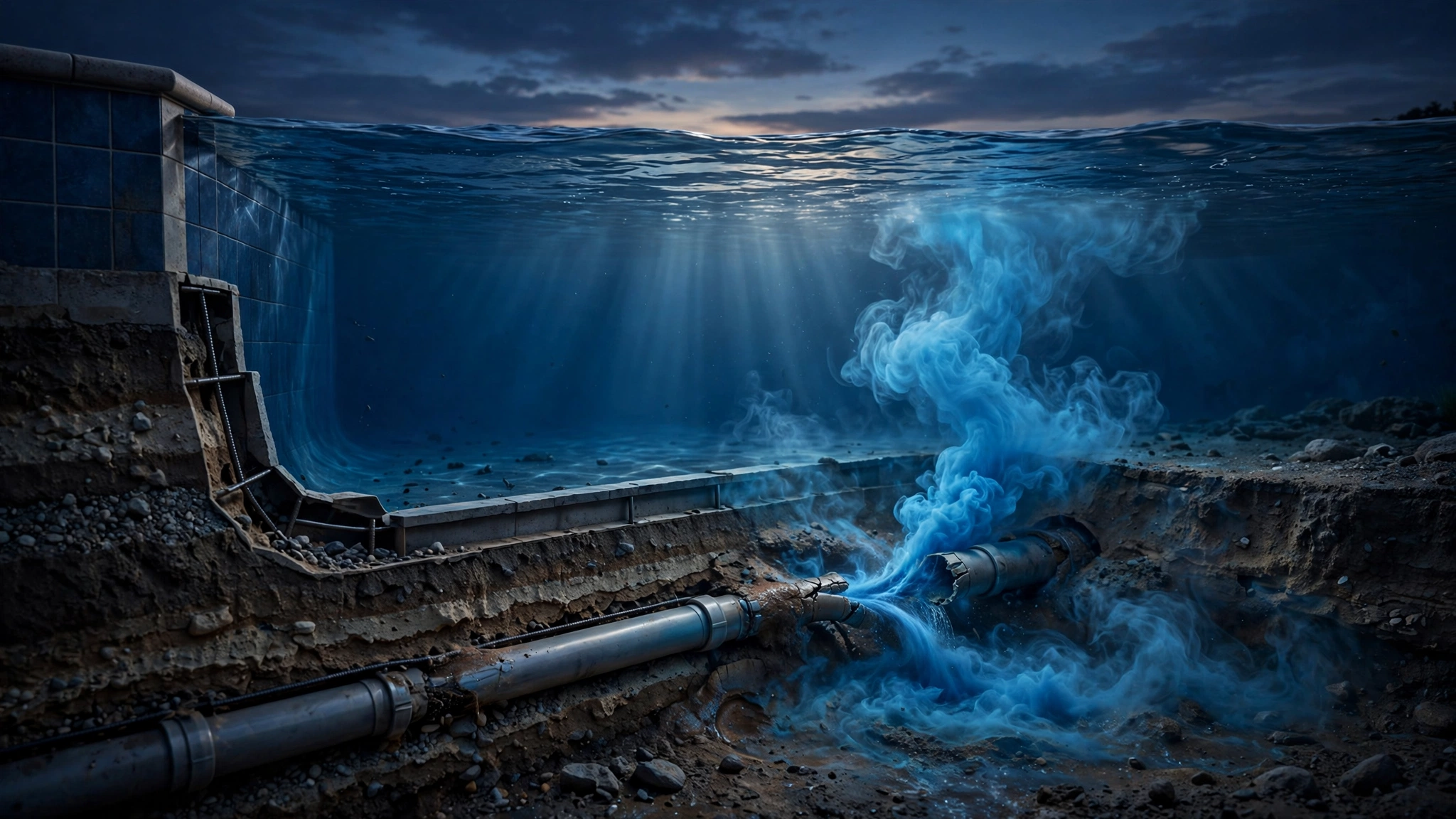
Many Sandy homes have pools, and Utah's dry climate makes every pool lose water to evaporation — which is exactly why real leaks get missed for months. The question is always the same: is it evaporation, or is it a leak? We answer it systematically: the bucket test establishes your baseline, pressure testing isolates the plumbing from the shell, and electronic detection pinpoints the failure — usually without draining the pool. And because we also cover spas and hot tubs, one visit can sort out the whole backyard water system.
Warning signs
When to call us
Run the bucket test first (we explain it below). If the pool loses significantly more than the bucket, you have a leak worth finding — especially before it undermines decking or wastes a season of water and chemicals. Catch it early and the fix is usually a targeted repair, not a replumb.
How we find it
Place a bucket of pool water on a pool step, mark both water levels, and compare after 24 hours with the pump running normally. Equal loss = evaporation. Pool losing more = leak. It's the simplest diagnostic in the business and it works.
Plumbing lines are isolated and pressurized one by one — skimmer, main drain, returns, cleaner lines. A line that won't hold pressure is the leaking one.
For vinyl-liner and fiberglass pools, electronic methods can trace leaks through the liner without draining.
With the pump off, dye is released near suspected cracks or fittings. If there's a leak, the dye gets drawn visibly toward it — simple, visual, conclusive.
Spas and hot tubs get the same systematic approach: shell vs. plumbing isolation, then targeted testing. Equipment leaks (pumps, heaters, manifolds) are the most common culprits.
Our process
- 1Bucket-test review
We start with your evaporation baseline — or run one — so we're chasing a real leak, not the Utah climate. - 2Visual & equipment check
Equipment pad, skimmer, returns, and visible plumbing get inspected first; many leaks are found here without advanced testing. - 3Isolation pressure testing
Lines are tested individually to separate plumbing leaks from shell leaks. - 4Pinpoint testing
Dye or electronic methods narrow the confirmed leak to its exact point. - 5Marked & documented
The leak location is marked and photographed with a clear description for your pool contractor.
Expect a process that usually doesn't require draining the pool — most testing is done with the water in place. You'll get a clear verdict: plumbing or shell, which line or area, and exactly where. Spa and hot tub leaks are covered in the same visit when they're part of the same system.
Honest limitations
We find leaks; pool contractors perform the repairs (liner patches, plumbing fixes, structural work). Multiple simultaneous leaks are possible in aging pools — we'll identify each one we can confirm. Evaporation in Utah's dry summers is genuinely high, so the bucket test baseline matters; we won't sell you a leak investigation for a pool that's just evaporating.
Sandy & Utah context
Utah gives pools a hard life: alkaline clay soils that shift, freeze-thaw cycles that stress plumbing and shells, and a dry climate with high evaporation that masks real leaks. Local specialists note that underground pool pipes in Utah fail from exactly this combination. Sandy's higher-end neighborhoods — Pepperwood, Willow Creek, Hidden Valley — have significant pool ownership, and many of those pools are now old enough for plumbing to be the prime suspect when water loss starts.