A leaking fire sprinkler system is a special kind of problem: the pipes are often hidden above ceilings or buried underground, the water is stagnant and corrosive, and every drip raises questions about system integrity. Our work is locating those leaks — a weeping head, a corroded pipe section, an underground fire line losing pressure — using acoustic, thermal, and pressure methods adapted to sprinkler systems. One important distinction, stated plainly: we find leaks. NFPA 25 inspection, testing, and maintenance compliance is a separate discipline performed by licensed fire-protection contractors — and we'll tell you which one you need.
Warning signs
When to call us
When a leak is known or suspected in the sprinkler system — visible drips, pressure loss, or unexplained water. Also after a system has been out of service or modified, when integrity verification is prudent. (If what you need is scheduled NFPA 25 compliance testing, we'll point you to a licensed fire-protection contractor instead — different service, different credentials.)
How we find it
The sprinkler network is evaluated for pressure loss that indicates a leak versus normal system behavior.
Pressurized sprinkler piping transmits leak sound the same way domestic piping does — listening equipment traces it, including for underground fire lines.
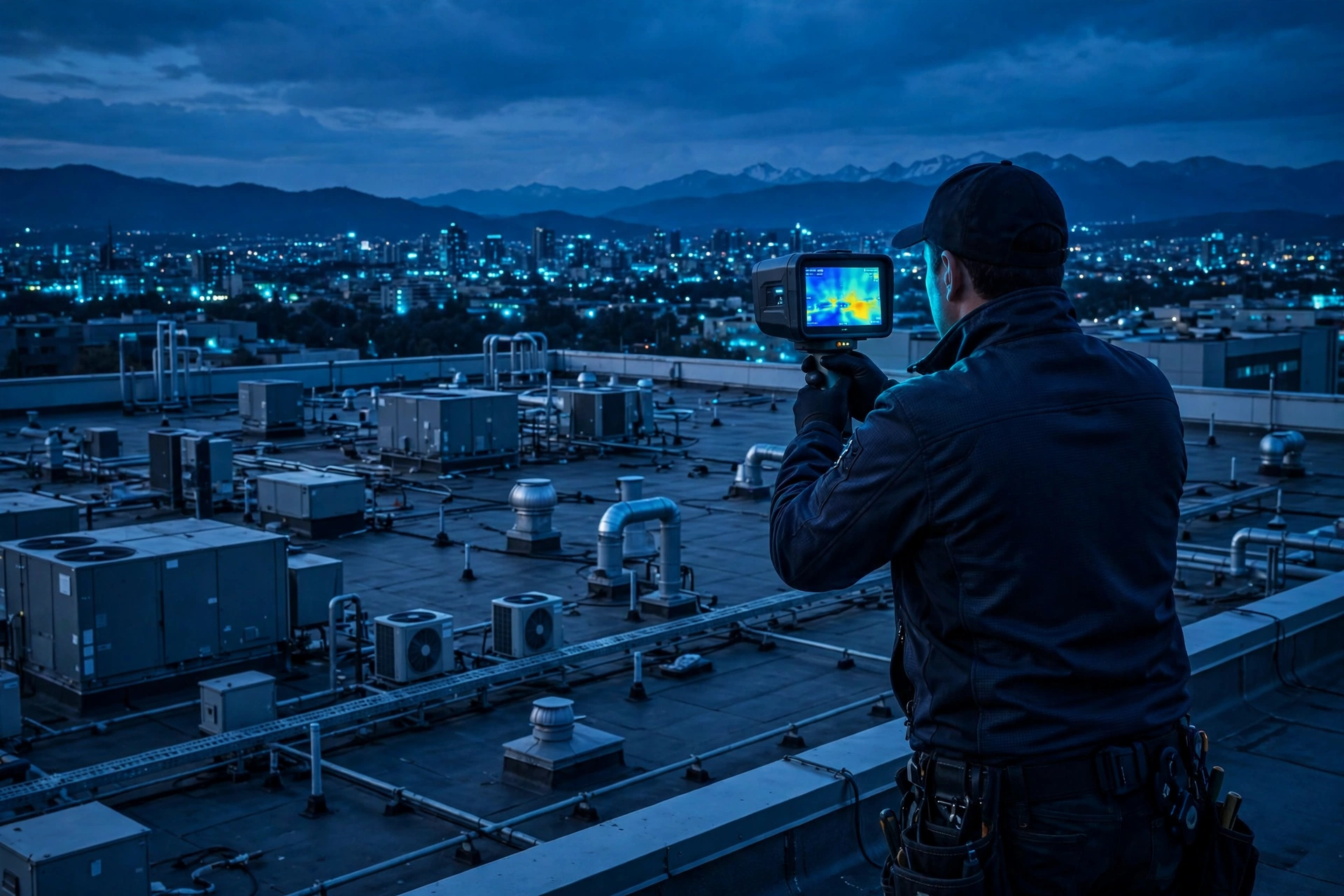
For leaks above ceilings or in walls, thermal patterns can reveal the wet area without opening the ceiling first.
Buried fire-service mains get the full underground treatment: line tracing plus acoustic or tracer-gas pinpointing.
We state this on every job: finding a leak is diagnostic work. NFPA 25 ITM — the inspections, flow tests, and compliance documentation your AHJ requires — belongs to licensed fire-protection contractors. We don't blur that line.
Our process
- 1System briefing
We review the system type (wet, dry, preaction), age, and history — sprinkler systems have quirks that matter for diagnostics. - 2Leak confirmation
Pressure behavior and visual evidence confirm there's actually a leak to find. - 3Section isolation
The network is divided — risers, branches, underground — to narrow the search. - 4Pinpoint
Acoustic, thermal, or tracer-gas methods locate the specific head, fitting, or pipe section. - 5Documented handoff
Marked location and a report for your fire-protection contractor to repair — because sprinkler repairs belong to licensed specialists.
Expect us to ask about your fire-protection contractor early — repairs to sprinkler systems must be done by qualified contractors, and we coordinate the handoff rather than pretend otherwise. Expect the same pinpoint-first philosophy as our domestic work: open one ceiling tile, not the whole ceiling.
Honest limitations
We locate leaks; we do not repair sprinkler systems, perform NFPA 25 compliance testing, or certify systems — those require licensed fire-protection contractors, and we'll refer you when that's what you need. We also don't take systems out of service or impair fire protection; if impairment is needed for investigation, your fire-protection contractor handles the protocols.
Sandy & Utah context
Sandy's commercial corridors — State Street, 9000 South, South Towne — hold office, retail, restaurant, and light-industrial buildings with aging wet-pipe systems now hitting the corrosion years. Utah's hard water accelerates internal sprinkler-pipe corrosion, and freeze exposure in unheated spaces threatens dry-system components. Property managers here often discover sprinkler leaks as mystery water damage — because nobody's first suspect is the fire system. It should be higher on the list than it is.