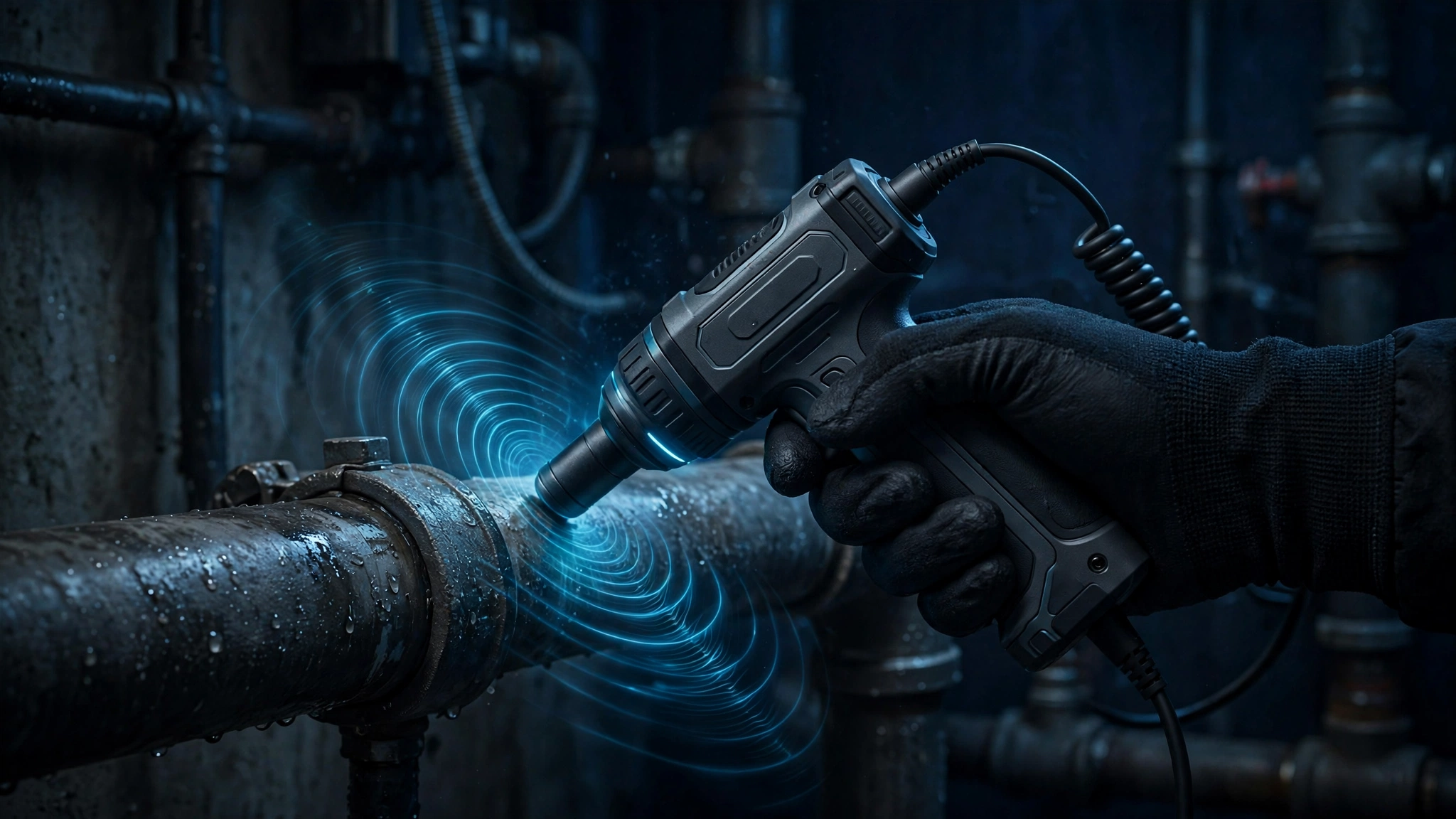
Pressurized water escaping through a pinhole makes a sound — a high-frequency hiss, too faint for human ears through concrete and soil, but unmistakable to electronic listening equipment. Acoustic leak detection is the art and science of hearing that sound: ground microphones, listening discs, and correlators that amplify, filter, and triangulate it until the loudest point marks the leak. It's the primary method behind most of our slab, underground, and wall investigations — and understanding how it works explains why 'electronic leak detection' from different companies can mean very different things.
Warning signs
When to call us
Acoustic detection is a method, not usually the first call — it comes into play once a leak is confirmed and needs pinpointing. If you've been told 'there's a leak somewhere' and nobody can say where, that's exactly when electronic listening earns its keep.
How we find it
Highly sensitive microphones placed on the ground or slab surface pick up leak sounds transmitted through soil and concrete.
Contact sensors placed directly on exposed pipe, valves, or fittings trace the sound along the pipe run — loudest nearest the leak.
Two sensors placed at known points on the pipe; the time delay between the leak's sound reaching each sensor calculates the leak's position between them.
Honest terminology note: in plumbing, 'electronic leak detection' usually means exactly this — electronic acoustic listening. In roofing, the same phrase means electrical membrane testing (a completely different method we use on commercial roofs). If a company says 'electronic detection,' ask which one they mean.
Our process
- 1Confirm the leak
Pressure testing first — acoustic work on a system that isn't actually leaking wastes everyone's time. - 2Map the pipe
Line tracing establishes the pipe's path so listening follows reality, not assumptions. - 3Survey listening
Sensors placed at intervals along the run identify the general area where the sound is strongest. - 4Pinpoint
Correlators or close-interval listening narrow the peak to a marked point. - 5Cross-check
Where possible, thermal or tracer-gas confirmation backs up the acoustic finding before we call it done.
Expect a quiet, methodical process — literally. The technician will be listening, moving sensors in small increments, and marking where the sound peaks. You'll see the logic in real time: louder here, quieter there, loudest at the mark.
Honest limitations
Acoustic methods need pressure — a leak in a non-pressurized drain line won't 'talk' the same way. Very deep burial, plastic pipe (which transmits sound poorly compared to metal), and high ambient noise can all reduce precision; a good technician tells you when conditions are limiting and switches methods rather than forcing a bad reading.
Sandy & Utah context
Sandy's mix of copper, PEX, and older galvanized and polybutylene lines matters acoustically — metal pipe carries leak sound far and clearly; plastic pipe dampens it, which is why plastic-line leaks sometimes need tracer gas instead. Local competitors all list acoustic detection as a core method, which tells you it's the expected standard here — the difference is in how rigorously it's applied and whether findings are cross-checked with a second method.