Drain and sewer problems hide in the one part of your plumbing you never see — until the symptoms surface: a persistent sewer odor, a drain that gurgles, soggy ground over the sewer lateral, or a basement floor drain with a story to tell. Finding the problem means looking inside the pipe, not guessing from above. We combine video camera inspection (to see the pipe's condition), smoke testing (to find cracks and open joints that cameras can miss), and hydrostatic pressure testing (to prove whether the line holds water) — three methods that answer three different questions about your drain system.
Warning signs
When to call us
Get the line inspected when odors, repeat backups, or soggy ground suggest a structural problem rather than a simple clog — and before buying a home with mature trees or an older lateral. A camera inspection before purchase is cheap insurance against a five-figure surprise.
How we find it
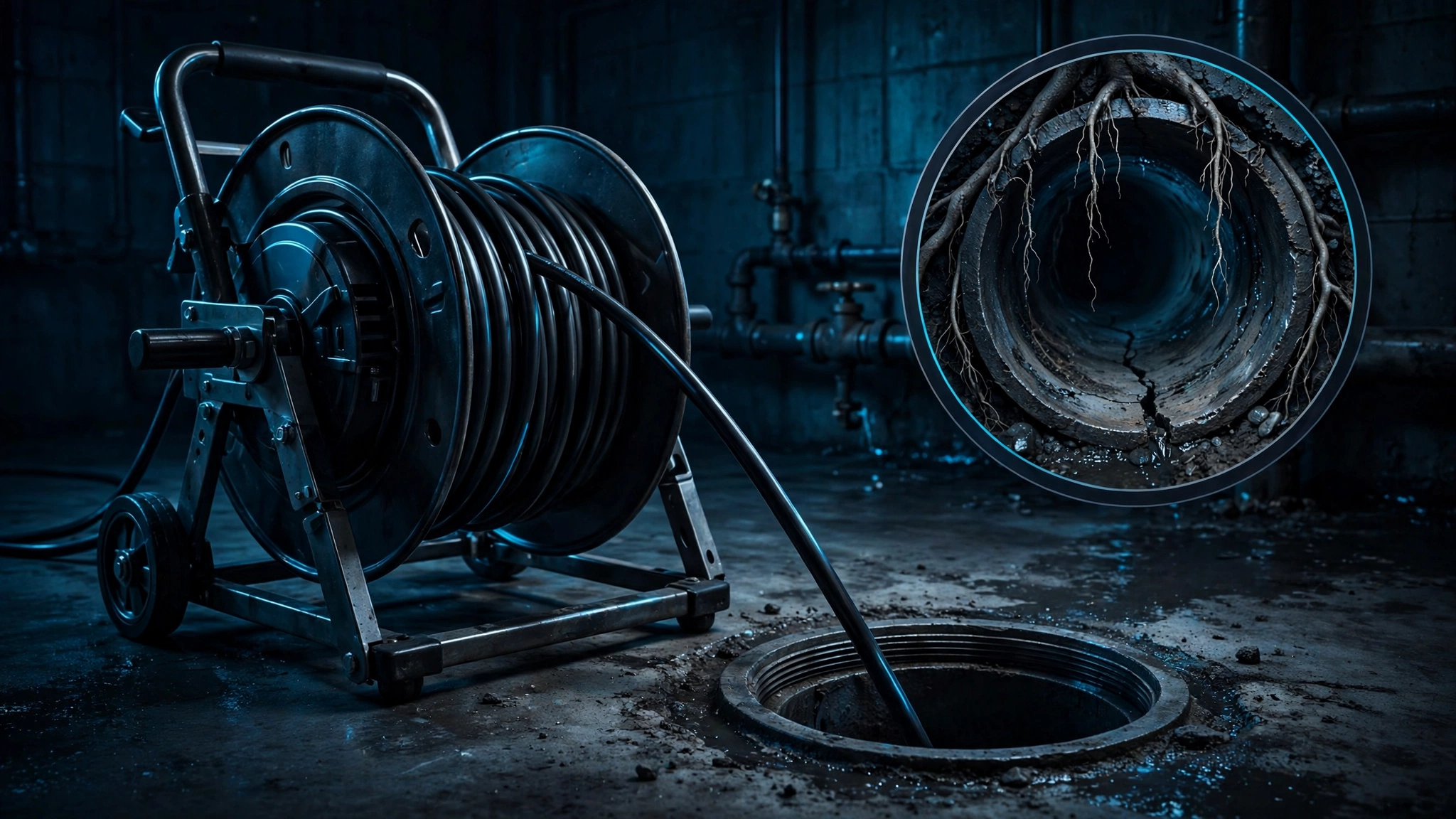
A push camera travels the line showing cracks, root intrusion, bellies (low spots that collect solids), offsets, and breaks — with distance markers so we know exactly how far in the problem sits.
Non-toxic manufactured smoke is introduced into the drain-waste-vent system. Where smoke escapes, there's a crack, open joint, or failed seal — including defects cameras can't see from inside the pipe.
The line is plugged and filled with water; a dropping level proves the system leaks even when the camera view is inconclusive.
Cameras distinguish the two: a blockage shows debris and standing water; a leak shows structural defects. The fix for each is completely different, which is why the distinction matters.
Our process
- 1Symptom mapping
We start with where and when: which fixtures, which smells, which wet spots — to choose the right access point. - 2Camera survey
The camera runs from an accessible cleanout through the lateral, recording condition and marking defect locations by distance. - 3Smoke or pressure test
When the camera is inconclusive or odors are the main symptom, smoke testing or hydrostatic testing provides the second opinion. - 4Locate & mark
Defects are located from the surface using the camera's locator beacon — you see exactly where the problem is in your yard. - 5Repair-ready report
Video findings, distances, depths, and a plain-English summary for your plumber or excavation contractor.
Expect to watch the camera feed with us and see the problem yourself — roots, cracks, and bellies are unmistakable on screen. Most residential laterals are fully surveyed in one visit from a single cleanout. If there's no cleanout access, we'll tell you upfront what that means for the inspection.
Honest limitations
Cameras show condition; they don't detect every leak — a hairline crack under no flow can look fine on camera but fail a pressure test, which is why we pair methods. We diagnose and locate; excavation and repair are your contractor's work. Heavily scaled or debris-filled lines may need cleaning before a camera can pass — we'll tell you if that's the case rather than force it.
Sandy & Utah context
Wasatch Front soil is clay and cobble with a frost depth around 30 inches — sewer laterals here typically run 48–60 inches deep. Tree roots aggressively target leaking joints in our soils, and 'bellies' (sagging sections that trap solids) are a known local pattern. Older Sandy neighborhoods with clay or Orangeburg-era laterals are the highest-risk stock; if your home predates the 1980s and the lateral was never replaced, an inspection is worth doing before problems announce themselves.