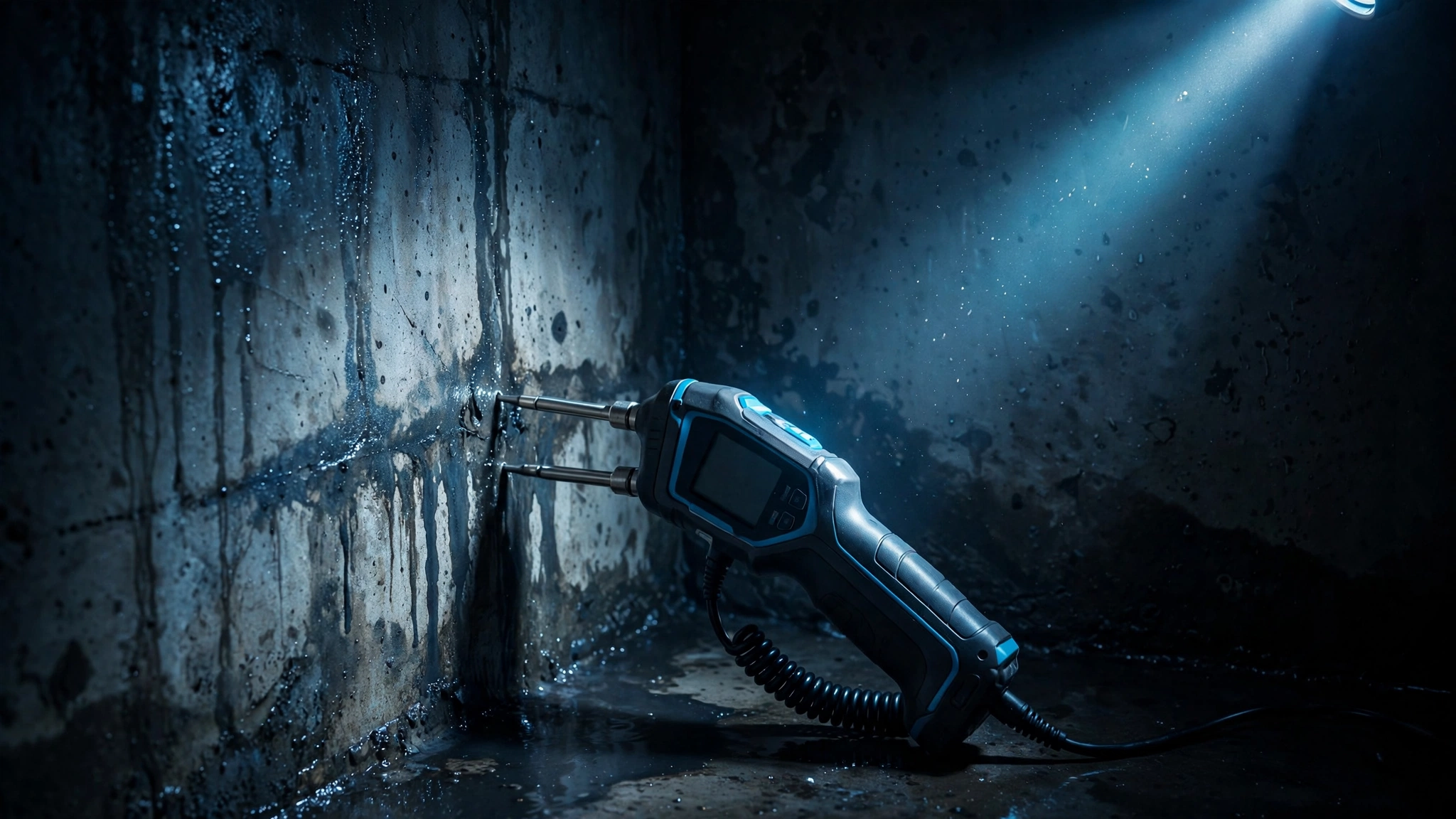
Water in a basement is a diagnostic puzzle, not a foregone conclusion. It could be a leaking supply or drain line inside the wall — or it could be groundwater seeping through the foundation, snowmelt finding a crack, or irrigation water pooling against the house. The fix for each is completely different, which is why the first step is figuring out what you're actually dealing with. We investigate basement water with moisture mapping, thermal imaging, and pressure testing to answer the key question: is this plumbing, or is this the ground?
Warning signs
When to call us
Get a professional diagnosis when you can't tell whether the water is plumbing or groundwater — because the wrong fix wastes money. Waterproofing won't stop a leaking pipe, and repiping won't stop a high water table. If the timing of the water (weather-linked vs. constant) is unclear, or if you see water coming up through the slab floor itself, an investigation is worth it before you commit to any contractor's solution.
How we find it
Pin and pinless moisture meters map exactly where walls and slab are wet and where they're dry — the pattern itself is diagnostic.
Infrared shows temperature differences from active water movement versus old, dried staining, helping separate current leaks from history.
If plumbing is suspected, isolating supply and drain lines and watching for pressure loss confirms or rules out the pipe system.
We correlate what we find with weather, irrigation schedules, and Sandy-area groundwater patterns (valley-floor water tables, spring snowmelt) to complete the picture.
Our process
- 1History interview
When does the water appear? After storms, during irrigation season, or constantly? The pattern narrows the suspects fast. - 2Moisture mapping
Meters and thermal imaging map wet vs. dry across walls, slab, and the wall-floor joint. - 3Plumbing check
If the pattern suggests plumbing, we pressure-test the suspect lines to confirm or eliminate them. - 4Source verdict
You get a clear answer: plumbing leak (with location), groundwater/seepage (with entry pattern), or a combination — plus what kind of contractor actually fixes it. - 5Documentation
Photos, moisture readings, and a written summary you can hand to a plumber, waterproofing contractor, or your insurer.
Expect an honest diagnostic, not a sales pitch for a system we don't sell. If it's a plumbing leak, we'll locate it. If it's groundwater, we'll show you the entry pattern and explain what a waterproofing or drainage contractor would address. Some basements have both — we'll say so plainly.
Honest limitations
We diagnose; we don't install sump pumps, French drains, or waterproofing membranes — that's a different trade, and we'll tell you when you need one. Groundwater behavior can also change seasonally; a dry-season investigation may need a wet-season follow-up for the full picture.
Sandy & Utah context
Sandy's geography matters here. Valley-floor neighborhoods deal with genuinely high water tables, while spring Wasatch snowmelt drives seasonal seepage across the area. Bentonite clay soils common along the Wasatch Front expand when wet and can push water against foundations. And Utah's irrigation culture means overspray or a broken sprinkler zone soaking one side of a foundation is, as local contractors put it, a classic. A good basement investigation in Sandy has to consider all of these — not just the pipes.